The road of empowering traditional Chinese medicine to go global with the power of Jiangxi is becoming wider and wider
发布时间:2026-01-05 14:28:02来源:互联网
In recent years, traditional Chinese medicine has accelerated its overseas expansion and blossomed around the world, benefiting human health. The 2025 Shanghai Cooperation Organization Traditional Medicine Forum will be held in Jiangxi from September 24th to 26th. On the basis of holding four sessions in the early stage, the SCO Traditional Medicine Forum is becoming an important platform for global discussion and sharing of traditional medicine; Jiangxi, as the venue for the forum, has become an important window for observing the "going global" of traditional Chinese medicine.
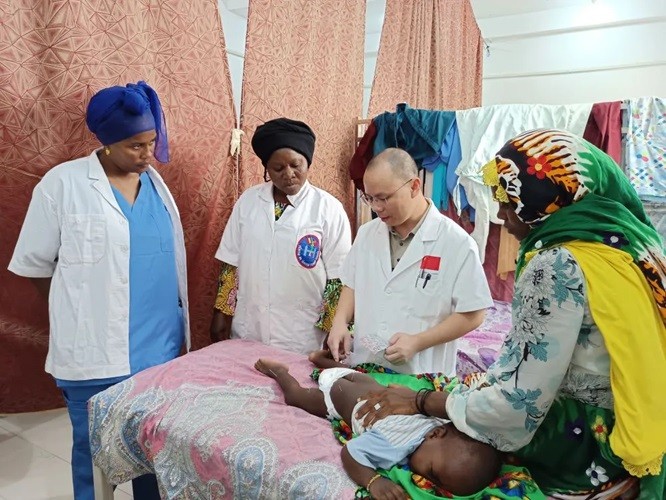
In August 2025, Xie Nengxiang, a doctor in the acupuncture and moxibustion Department of the 20th batch of China (Jiangxi) Medical Team assisting Chad, will treat the children and guide the medical staff of the local hospital in the treatment room of the acupuncture and moxibustion Department of China Chad Friendship Hospital.
On the southern coast of the Mediterranean, the sunshine draped a golden veil over the ancient city of Tunis. Zong Yi, the leader of the acupuncture and moxibustion Detachment of the 29th batch of Chinese (Jiangxi) Medical Assistance Team to Tunisia and a doctor from the Affiliated Hospital of Jiangxi University of Traditional Chinese Medicine, led four members of the team to the home of local resident Saloy for follow-up.
A month ago, Saloe suffered from severe back pain and limited mobility. After five acupuncture and moxibustion treatments by Zong Yi's team, she has been able to entertain guests freely, "Chinese acupuncture and moxibustion is amazing".
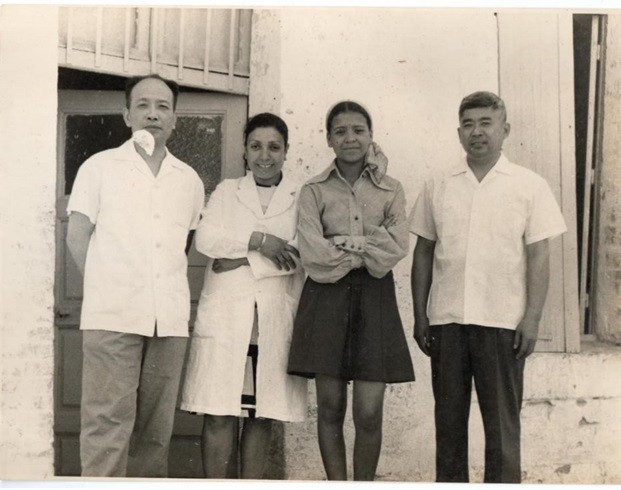
Zong Ruilin (first from left), one of the first Chinese medicine aid team members in Jiangxi Province, took a photo with Tunisian medical staff.
This scene is very familiar to the three generations of the Zong family who continue to provide foreign aid. In 1973, Zong Yi's grandfather Zong Ruilin joined the first batch of foreign aid medical teams in Jiangxi and became the only traditional Chinese medicine practitioner in the team. "At that time, the diagnosis and treatment of traditional Chinese medicine in Tunisia was almost blank." Zong Yi introduced that his grandfather used acupuncture and moxibustion to make local residents gradually accept traditional Chinese medicine from suspicion and hesitation.
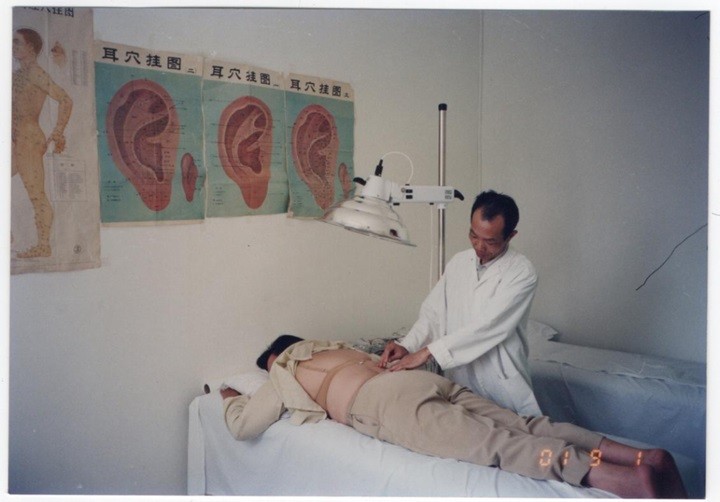
Zong Chongyang implemented acupuncture and moxibustion treatment for patients in Tunisia.
27 years later, Zong Yi's father, Zong Chongyang, relay aid to Tunisia. Before leaving, Zong Ruilin was diagnosed with advanced lung cancer, and Zong Chongyang was unable to see him for the last time. Zong Chongyang told reporters that although this is a regret in life, it is the best comfort to be able to use silver needles to continue his father's long cherished Chinese medicine aid to foreign countries and help more patients recover their health.
Last year, when Jiangxi selected the 29th batch of Tunisian medical team members, Zong Yi applied decisively and was selected as the leader of the acupuncture and moxibustion team of the medical team. He used abdominal acupuncture therapy to treat neck, shoulder, waist, and leg pain in Tunisia, and conducted health lectures to deepen the understanding of traditional Chinese medicine culture among the Tunisian people.
The silver needle has been passed down for three generations, and the benevolent heart and technique transcend mountains and seas. "My grandfather opened up the situation with acupuncture and moxibustion, and my father sowed kindling. I want to make Chinese medicine culture take root overseas," Zong Yi said.
Zong Ruilin's three generations of relay aid to foreign countries is the torch of China's foreign aid medical team, and a microcosm of promoting the ancient wisdom of traditional Chinese medicine to cross national borders. Since 1973, Jiangxi Province alone has dispatched 29 batches of 157 traditional Chinese medicine doctors to Tunisia and Chad, treating approximately 800000 local patients. Among them, the Affiliated Hospital of Jiangxi University of Traditional Chinese Medicine dispatched 68 people to assist Tunisia, playing an important role in spreading traditional Chinese medicine culture and enhancing the influence of traditional Chinese medicine.
According to the data released by the National Health Commission, there are 113 WHO member countries that have approved the use of acupuncture and moxibustion, and traditional Chinese medicine has spread to 196 countries and regions. The International Organization for Standardization has established the Technical Committee on Traditional Chinese Medicine and formulated and promulgated 119 international standards for traditional Chinese medicine.
In Bulgaria on the Balkan Peninsula, traditional Chinese medicine is rapidly integrating into the lives of local residents.
At the beginning, due to language barriers, communication during consultations was quite difficult, "said Xiao Menghui, a doctor from the Traditional Chinese Medicine Center stationed at the Unimi Hospital in Bulgaria from Jiangxi. Every time he saw the enthusiasm and trust of the local people in traditional Chinese medicine, it prompted him to accelerate his integration into the local society, understand their dietary culture, living environment, and disease spectrum.
Since its operation last year, the Traditional Chinese Medicine Center of Unimi Hospital in Bulgaria has received thousands of patients and over 20 thank-you letters from patients. What is even more commendable is that relying on the diagnosis and treatment income center has been able to self generate blood. In order to meet the demand of more local people for traditional Chinese medicine, the Bulgarian Traditional Chinese Medicine Center will also open in Plovdiv, the second largest city in the area, and the clinic area will be expanded from 30 square meters to over 100 square meters.
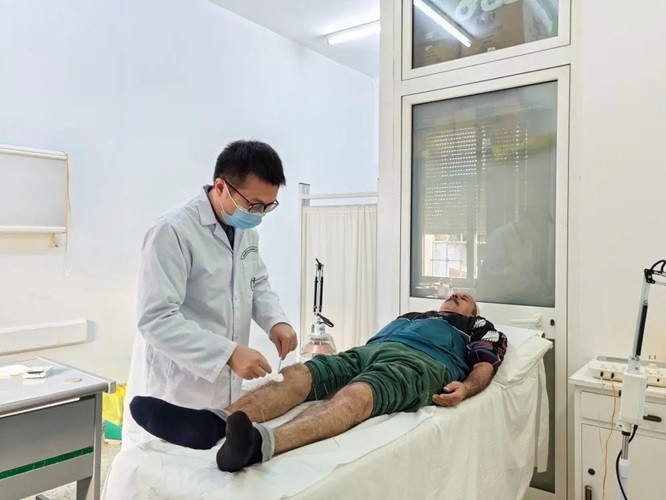
In March 2025, Zong Yi performed acupuncture and moxibustion treatment for a patient in the Chinese Medicine Center of Tunisian MongiSlim Marsa Hospital.
On September 20th, in Chad, Africa, which is tens of thousands of kilometers away from China, the "China Chad Traditional Chinese Medicine Appropriate Technology Training Center" jointly built by the Chinese medical team and local universities was unveiled and put into use.
The establishment of the training center originated from the popularity of traditional Chinese medicine in Chad. Dijida, a local resident in his 40s, suffered from facial paralysis due to a viral infection, with his left eye unable to close and his mouth tilted. He recovered after receiving three courses of acupuncture and moxibustion treatment in the Sino Zhai Friendship Hospital. In addition to Chinese foreign aid doctor Xie Nengxiang, there are also six local technicians who administer injections to Dijida.
At the China Chad Friendship Hospital, every Friday is designated as the 'Chinese Doctors Training Day'. Six local technicians in the acupuncture and moxibustion Department of the hospital have all mastered the therapeutic techniques of suspension moxibustion, warm acupuncture and moxibustion, facial paralysis massage and so on after clinical teaching. Chadian doctor Mustafa sighed and said, "Traditional Chinese medicine is amazing, and Chinese doctors are amazing
In April this year, 13 teachers and students from the School of Pharmacy of Lisbon University in Portugal went to Jiangxi University of Traditional Chinese Medicine to learn clinical techniques such as acupuncture and moxibustion, massage and moxibustion. Portuguese traditional Chinese medicine practitioner Carlos, who came to Jiangxi for exchange, personally observed how local doctors apply traditional Chinese medicine theory to clinical practice and deeply understood that "traditional Chinese medicine focuses on the overall state of a person, from physical, emotional to psychological aspects, and provides targeted treatment for different individuals
Since the establishment of the partnership between Jiangxi University of Traditional Chinese Medicine and the University of Lisbon in Portugal in 2018, regular visits between teachers and students have been achieved. The "China Portugal Traditional Medicine Joint Laboratory" project jointly applied by the two universities was successfully approved at the end of last year, marking the joint exploration of new paths for international cooperation in traditional Chinese medicine by Chinese and Portuguese universities.
Recalling the scene eight years ago when he came to Russia to exchange Chinese medicine culture as a master of Chinese Tonic Diet, Gong Qianfeng, Vice President of the Chinese Medicine Processing Branch of the Chinese Society of Traditional Chinese Medicine, still remembered, "I didn't expect Tonic Diet to be very popular in Russia. The originally planned exchange time was one week, but later it was extended to one month".
Traditional Chinese medicine emphasizes the concept of "medicine and food sharing the same origin", and common foods such as red dates, goji berries, and lilies all have medicinal functions. In December 2017, Gong Qianfeng and his colleagues brought over 100 kilograms of Chinese herbal medicine slices to Sochi, Russia to attend the 16th meeting of the Council of Heads of Government of the Shanghai Cooperation Organization member states. He cooked a variety of dishes, such as Tonic Diet duck and delicacies tofu, with pieces of Chinese medicinal materials such as Angelica sinensis and peony, which were praised by the guests at the conference, who commented that these Tonic Diet "smelled the fragrance, tasted the freshness, and tasted the aftertaste".
In addition to making Tonic Diet, Gong Qianfeng also used the pieces of traditional Chinese medicine he carried and the formula granules he exported from China to make prescriptions in local hospitals. He was invited to visit several cities in Russia to exchange ideas and introduce traditional Chinese medicine culture such as Tonic Diet, medicinal wine and medicinal tea. Gong Qianfeng said, "This trip to Russia has deeply impressed me with the enormous prospects of traditional Chinese medicine going global and benefiting humanity.
Traditional Chinese medicine contains profound philosophical ideas of the Chinese nation. A large number of philosophical and dialectical expressions in traditional Chinese medicine classics have left traditional Chinese medicine and culture in an awkward situation of being "unclear, unclear, and difficult to spread" overseas for a long time.
The frequent use of yin and yang in traditional Chinese medicine theory in the past has troubled many foreigners who want to learn traditional Chinese medicine, "said Yu Jing, Vice Dean of the School of Humanities at Jiangxi University of Traditional Chinese Medicine. Now, using concrete expressions such as" facing the sun as yang "and" backing the sun as yin ", the past pinyin translation of yin and yang is introduced more specifically. At present, they are enriching the corpus of traditional Chinese medicine and recording public courses such as Traditional Chinese Medicine Diagnosis and Traditional Chinese Medicine Aromatherapy in English, in order to "facilitate the barrier free dissemination of traditional Chinese medicine culture overseas".
As one of the few traditional medicines in the world that has not been interrupted and has been passed down to this day, the rich development of traditional Chinese medicine also benefits from exchanges with various parts of the world. The medicinal herbs such as rhinoceros horn and myrrh commonly seen in traditional Chinese medicine prescriptions are all sourced from Africa. Traditional medicine of various countries is a common treasure of humanity, "said Liu Xiaohui, Director of the Jiangxi Provincial Administration of Traditional Chinese Medicine. The SCO Traditional Medicine Forum not only introduces and spreads traditional Chinese medicine culture, but also strives to build a platform for traditional medicine exchange and mutual learning among countries.
At the 2024 Shanghai Cooperation Organization Traditional Medicine Forum, the participating parties jointly released the "Nanchang Consensus of the Shanghai Cooperation Organization Traditional Medicine Forum", which proposes to "strengthen information sharing in the field of traditional medicine, establish a platform for traditional medicine information exchange, and promote innovative development of traditional medicine".
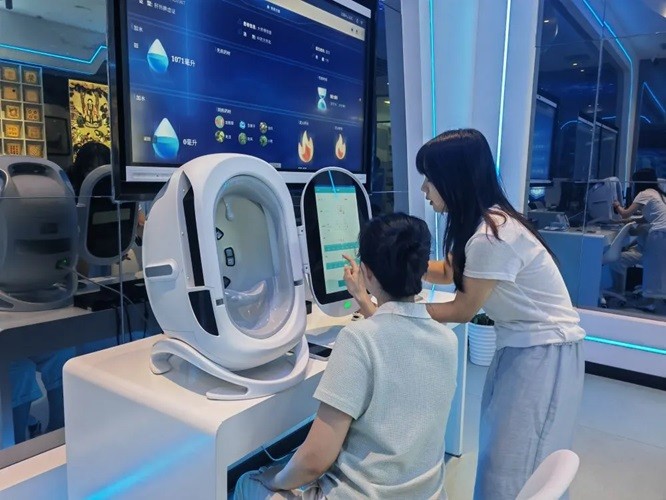
In September 2025, at the Traditional Chinese Medicine Innovation City in Ganjiang New District, Jiangxi Province, visitors are experiencing the intelligent four diagnostic instrument.
The analysis of tongue coating images has been completed, and the collection of pulse data has been successful. "At the Traditional Chinese Medicine Innovation City in Ganjiang New Area, Jiangxi Province, Wang Xuecheng, Product Director of the National Traditional Chinese Medicine Resources and Manufacturing Technology Innovation Center, watched the working screen of the intelligent four diagnostic instrument. In just ten minutes, this AI device that integrates over 300000 ancient and modern medical cases, as well as millions of clinical cases, can complete diagnosis and prescribe personalized prescriptions.
Wang Xuecheng introduced that the intelligent four diagnostic instrument can recognize over 100 physical conditions, and prescriptions are directly delivered to the intelligent dispensing center through the system. The fully automatic medication dispensing equipment can accurately dispense medication in just 20 seconds, with an accuracy rate of up to 99.97%.
On the occasion of the opening of the 2025 Shanghai Cooperation Organization Traditional Medicine Forum, reporters felt during their visit to the Traditional Chinese Medicine Innovation City in Ganjiang New Area, where the forum was held, that a transformation supported by artificial intelligence is quietly taking place, reshaping the underlying logic of traditional Chinese medicine going global.
The Ganjiang Traditional Chinese Medicine Innovation Center, which is not far away, is led by Deputy Director Xu Qing and Software Technology Expert Xiao Yuansheng to overcome a series of difficult problems in traditional Chinese medicine research. "What components make up a traditional Chinese medicine, which components work, and whether new drugs can be developed are the core issues we need to solve," Xu Qing said.
Xiao Yuansheng introduced that due to the complexity and ambiguity of traditional Chinese medicine, the treatment of diseases with traditional Chinese medicine lacks modern scientific language interpretation and data support. To break this deadlock, the most crucial step is to analyze the components and mechanisms of traditional Chinese medicine, and use modern scientific technologies such as AI to quickly open the black box of traditional Chinese medicine.
The digital wave is surging, and the millennium old Qihuang technique is ushering in a 'digital intelligence transformation'. In July last year, the State Administration of Traditional Chinese Medicine and the National Data Administration jointly issued the "Several Opinions on Promoting the Development of Digital Traditional Chinese Medicine", which clearly proposed to "gradually integrate emerging digital technologies such as big data and artificial intelligence into the entire chain of traditional Chinese medicine inheritance, innovation and development within 3 to 5 years".
The strategic layout at the national level has solved key obstacles such as data sharing and mutual recognition of standards for us. Wang Xuecheng believes that policy dividends will accelerate the internationalization process of traditional Chinese medicine. Empowered by technologies such as AI, traditional Chinese medicine is showing new characteristics when going global: from relying on experience inheritance to data-driven, from fuzzy description to precise quantification, from traditional production to intelligent production.
From "using medicine to lead medicine" to "using numbers to lead medicine", with the empowerment of AI, the road for traditional Chinese medicine to go global is becoming wider and wider.
免责声明
【慎重声明】 凡本站未注明来源为“默认站点”的所有作品,均转载、编译或摘编自其它媒体,转载、编译或摘编的目的在于传递更多信息,并不代表本站赞同其观点和对其真实性负责。 如因作品内容、版权和其他问题需要同本网联系的,请在30日内进行!